Amazon's $200B AI Infrastructure Spend Exposes Physical Bottlenecks That Will Reshape Cloud Power Dynamics
The AI infrastructure boom will be won not by chip innovation alone, but by those who master the physical world of power, permits, and proprietary systems that bypass broken supply chains.
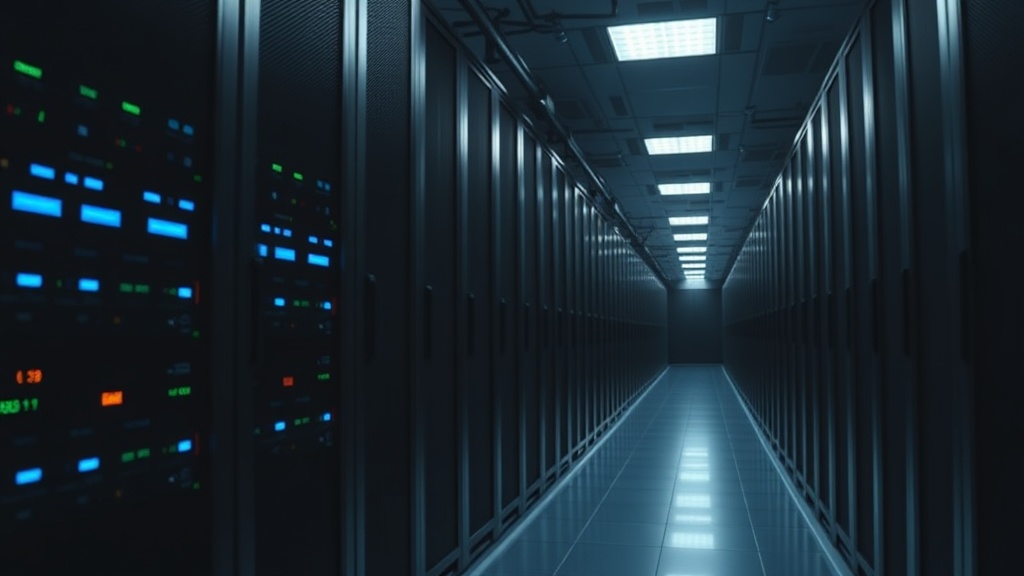
The Physical Reality Behind Amazon's $200B AI Infrastructure Bet
Amazon's announcement of a $200 billion AI infrastructure spend for 2026 isn't just another big tech headline—it's a revelation about where the real battles for AI dominance will be fought. This figure, which exceeds analyst expectations by over $50 billion and nearly doubles the company's 2025 property and equipment spend, signals a shift from the algorithmic arms race to a gritty contest over electrons, concrete, and copper. While competitors obsess over parameter counts and training speeds, Amazon is betting that mastery of the physical world—power grids, transformer supply chains, and proprietary systems—will determine who wins the next decade of cloud dominance.
The Catalyst: When Physics Meets Exponential Demand
The trigger for this strategic pivot is a stark and growing mismatch. AI compute demand is rising at a pace that silicon innovation alone cannot satisfy, yet the physical infrastructure required to deliver that compute—data centers, power connections, and cooling systems—operates on timescales measured in years, not months. Securing a new power grid connection in a major hub like London can take up to a decade. Transformer lead times stretch to 100 weeks in Europe and 50 weeks in the United States. Meanwhile, next-generation AI server racks draw such immense power that traditional electricity delivery methods fail, necessitating advanced solid-state transformers (SSTs) that also enable electric vehicle fast charging. This collision between exponential software demand and linear physical supply chains is forcing hyperscalers to confront a brutal truth: without control over the physical layer, even the most advanced AI chips become stranded capital.
Capital & Control Shifts: The Billion-Dollar Bet on Vertical Integration
The financial scale of this shift is staggering. The "Magnificent Four"—Amazon, Microsoft, Alphabet, and Meta—are projected to spend $630 billion on data centers and AI chips in 2026 alone, an amount equivalent to 2.2% of U.S. GDP and more than four times the 2023 figure. Amazon's $200 billion commitment represents not just increased spending, but a fundamental reallocation of capital toward infrastructure that bypasses traditional bottlenecks. The returns on this bet are already being questioned: Alphabet's return on invested capital is forecast to fall from 51% to 36% by 2030, while Microsoft's is projected to drop from 95% to 36% over the same period. These numbers reflect a growing awareness that simply throwing money at AI chips will not yield returns if the power to run them cannot be secured in time. The structural shift is clear: winners will be those who integrate vertically, controlling not just chips and software, but the physical systems that power and cool them.
Technical Implications: Beyond Chips to the Grid Itself
Under the hood of this infrastructure boom lies a silent revolution in power engineering. Traditional data center designs, built for general-purpose computing, are inadequate for the power density of modern AI workloads. The industry is witnessing a shift from air cooling to complex liquid systems to manage the heat from Nvidia's Blackwell chips and the forthcoming Rubin architecture. Electrical infrastructure is evolving toward solid-state transformers that can handle extreme loads while enabling secondary revenue streams like EV charging. Perhaps most significantly, hyperscalers are exploring "island" data centers powered by on-site gas turbines to bypass grid constraints entirely—a workaround that creates its own bottleneck, as suitable turbines are effectively sold out until 2029. These technical adaptations are not mere upgrades; they represent a fundamental redesign of the data center for the AI era, where the limiting factor is no longer silicon, but the ability to move electrons and manage heat at unprecedented scales.
The Core Conflict: Standardization vs. Proprietary Workarounds
At the heart of this transformation is a growing tension between two infrastructure philosophies. On one side stand traditional equipment vendors offering standardized, off-the-shelf power, cooling, and networking solutions. On the other are the hyperscalers themselves, who are increasingly compelled to design proprietary systems or forge unconventional partnerships to get AI infrastructure online fast enough. Amazon, for instance, is leveraging its scale to design custom electrical equipment, while Microsoft is experimenting with renting capacity from agile "neocloud" operators like CoreWeave and Nebius—companies that often occupy repurposed bitcoin mining facilities with pre-secured land, power, and permits. This conflict is not about preference, but necessity: when standard supply chains cannot meet hyperscaler demand cycles, the only rational response is to build workarounds, even if they fragment the market and increase complexity.
Structural Obsolescence: What Breaks in the New Power Dynamic
Several legacy models are poised for obsolescence as a consequence of this shift. First, the assumption that grid-scale power upgrades can keep pace with AI demand cycles is breaking; lead times for transmission infrastructure simply do not align with the 2-3 year deployment windows for AI clusters. Second, traditional transformer-based power distribution is becoming inadequate for the extreme power densities of next-generation AI racks, driving adoption of SSTs and other novel approaches. Third, generic colocation models that provide only space and power, without integrated cooling and networking optimized for AI workloads, are losing relevance to vertically integrated solutions that offer turnkey AI-ready infrastructure. What breaks is not the need for data centers, but the belief that they can be procured and built using the same processes and timelines that served the pre-AI era.
The New Power Dynamic: Winners, Losers, and the Emerging Moat
The structural realignment creates clear winners and losers. Amazon Web Services emerges as a primary beneficiary, not because of its AI models alone, but due to its unmatched capacity to design and deploy proprietary infrastructure solutions that bypass broken supply chains. Its vertical integration—spanning chips, software, and now physical systems—creates a structural advantage that is difficult to replicate. Microsoft's partnership strategy with neocloud providers offers a complementary path to agility, allowing it to access infrastructure without the capex burden of building everything from scratch. In contrast, traditional data center equipment suppliers—companies like Schneider Electric, Eaton, and Hitachi Energy—face a structural impossibility. Their business models are built around multi-year production cycles and standardized products, leaving them unable to scale fast enough to meet hyperscaler needs. As a result, they risk commoditization, becoming suppliers of undifferentiated components rather than strategic partners in the AI infrastructure stack.
The Unspoken Reality: The Industry's Dangerous Oversight
What remains largely unacknowledged in the prevailing AI infrastructure narrative is the extent to which the industry continues to treat this as a semiconductor-driven arms race. Conference keynotes and analyst reports obsess over FLOPS, parameter counts, and training speeds, while devoting scant attention to the 19th-century problems that actually constrain progress: moving electrons through wires, securing rights of way for trenching, and obtaining permits for construction. This oversight creates a dangerous illusion—that AI progress is governed by Moore's Law variants when, in reality, it is increasingly gated by the pace of civil engineering and utility work. The true bottleneck and, consequently, the true source of competitive advantage, lies not in the fab but in the field.
The Foreseeable Future: A Timeline of Structural Shifts
Looking ahead, the evolution of AI infrastructure will follow a predictable trajectory. In the short term (0–6 months), expect increased adoption of "island" data centers with on-site power generation and hyperscaler-designed proprietary electrical systems as companies seek immediate workarounds to grid constraints. Over the mid term (6–24 months), this will consolidate into a permanent shift toward vertically integrated infrastructure stacks where the winners exert control not just over chips and software, but over the entire physical layer of power delivery and cooling. Infrastructure scale, once a mere cost center, will transform into an enduring moat—as difficult to challenge as a dominant position in chip design or software ecosystems. Companies that fail to adapt will find their AI investments hampered by delays and stranded capital, while those that master the physical layer will turn infrastructure from a liability into their most defensible advantage.
Strategic Directives: What Enterprises Must Do Now
For enterprise leaders navigating this shift, the imperative is clear and time-bound. Within 30 days, organizations should audit their AI workload placement strategies to identify dangerous dependencies on legacy power procurement models with multi-year lead times. Within 60 days, they must evaluate partnerships with infrastructure providers offering proprietary power solutions or neocloud access that can bypass physical bottlenecks. Within 6 months, the strategic redirect should be underway: shifting capital expenditure toward vendors with demonstrated ability to deliver AI-optimized power and cooling infrastructure on hyperscaler-relevant timelines—measured in weeks, not years. Those who act decisively will secure not just AI capabilities, but the resilient, scalable foundation needed to turn AI experimentation into sustainable, enterprise-wide transformation.
Stay ahead of the AI shift
Daily enterprise AI intelligence — the decisions, risks, and opportunities that matter. Delivered free to your inbox.