Nebius' $10B Finland AI Data Center Shifts European Compute Sovereignty Balance
Nebius' strategic 310MW Finland data center creates Europe's largest AI compute hub, challenging US dominance while securing critical supply chains with Microsoft and Meta.
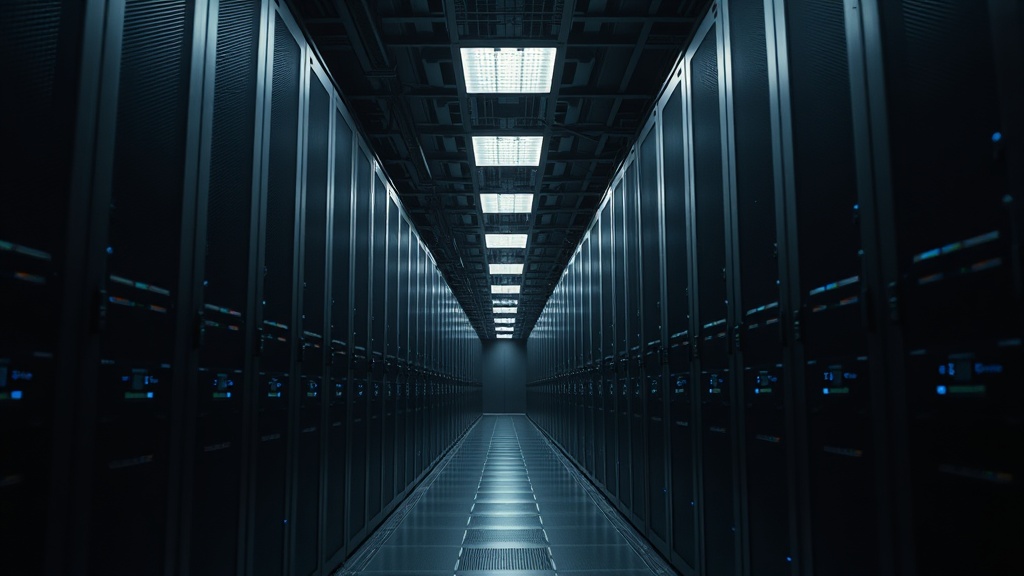
Nebius' $10B Finland AI Data Center Shifts European Compute Sovereignty Balance
The Incident / Core Event Nebius Group has announced plans to construct a 310-megawatt AI data center in Lappeenranta, Finland, representing a watershed moment in the global AI infrastructure landscape. This facility, slated for phased completion beginning in 2027, carries an estimated valuation exceeding $10 billion—positioning it as one of Europe's most substantial AI infrastructure investments to date. The strategic significance extends beyond mere scale; this becomes Nebius' largest operational site outside the United States, eclipsing its existing 240MW facility near Lille, France and its 75MW site in Mantsala, Finland. The project emerges from Nebius' uniquely positioned background: formed from the 2024 Yandex breakup, the company inherited decades of hyperscale data center expertise while securing approximately $2.5 billion in initial capital—a foundation that has since enabled it to win over $40 billion in supply contracts with tech titans Microsoft and Meta. Finland was selected not arbitrarily but for its distinctive combination of 100% renewable electricity grid, exceptionally low energy prices relative to continental Europe, and a cold climate that enables natural cooling solutions reducing power usage effectiveness (PUE) to an industry-leading 1.08 compared to the global average of 1.55. Once operational, the facility will consume approximately 2.4 terawatt-hours annually—equivalent to powering 500,000 Finnish households—and will represent roughly 10% of Nebius' ambitious target to secure 3 gigawatts of contracted power capacity by the end of 2026.
The Catalyst This multi-billion dollar Finnish investment did not emerge in isolation but as a direct response to three converging structural pressures reshaping the AI compute landscape. First, escalating US-China technological decoupling has triggered data localization imperatives across multinational enterprises, with CIOs now facing board-level mandates to ensure AI workloads processing European citizen data remain within jurisdictional boundaries compliant with GDPR and the newly enacted European AI Act. Second, the AI Act's risk-based classification system is creating de facto requirements for real-time data processing localization that transcend mere legal preference—organizations deploying high-risk AI systems must now demonstrate that training and inference occur within approved geographic zones to avoid prohibitive fines reaching 6% of global revenue. Third, Finland presents a near-unique convergence of advantages: its grid operates on 100% renewable sources (primarily hydro, nuclear, and wind), providing both sustainability credentials and price stability; its average annual temperatures enable free-air cooling for approximately 8-9 months annually, slashing the energy traditionally devoted to chillers; and its political stability, coupled with streamlined permitting for critical infrastructure, offers predictability absent in many competing European locales. These factors combine to create what Nebius terms a "favourable ecosystem environment"—a strategic trifecta of regulatory compliance, operational efficiency, and long-term cost predictability that American hyperscalers struggle to replicate at equivalent scale within their domestic footprints.
Capital & Control Shifts The financial architecture surrounding Nebius' Finland initiative reveals a sophisticated evolution in AI infrastructure financing that diverges sharply from traditional hyperscaler models. Rather than relying solely on balance sheet cash flows or dilutive equity raises, Nebius has leveraged its strategic customer relationships to create non-dilutive financing pathways. The company's $27 billion AI compute deal with Meta and expansive supply contracts with Microsoft function not merely as revenue streams but as collateralized financing instruments—enabling Nebius to secure construction financing and equipment procurement at favorable terms while preserving equity structure for existing stakeholders. This approach represents a fundamental shift from the GPU-leasing models that dominated early AI infrastructure to a vertically integrated strategy where Nebius owns and controls the entire stack: from land acquisition and power contracting through custom server rack design to multi-tenant cloud services and inference platforms like its Token Factory offering. By retaining control across these layers, Nebius captures margin at each transition point—saving 15-20% on compute hardware alone through proprietary rack designs, optimizing power usage through liquid cooling innovations, and monetizing orchestration software that guarantees customers precise net available capacity. The Finland site specifically enables Nebius to pursue its goal of securing more than 3 gigawatts of contracted power by end-2026—a scale that, when combined with its existing 750MW EMEA portfolio (including a 240MW Lille project), positions it as Europe's first indigenous challenger to the American hyperscaler triumvirate of AWS, Azure, and Google Cloud in the AI-specific compute market.
Technical Implications The engineering specifications of Nebius' Finland facility reveal deliberate choices that create structural advantages over both legacy enterprise data centers and competing hyperscaler offerings. A detailed comparison exposes the quantitative differentiators:
| Metric | Nebius Finland Site | Nebius Lille, France | Nebius Mantsala, Finland | Typical Enterprise DC |
|---|---|---|---|---|
| Power Capacity | 310 MW | 240 MW | 75 MW | 5-10 MW |
| Estimated Valuation | $10B+ | ~$7.5B | ~$2.2B | $0.15-0.3B |
| Power Usage Effectiveness (PUE) | 1.08 | 1.25 | 1.30 | 1.55-2.0 |
| Annual Energy Consumption | ~2.4 TWh | ~1.9 TWh | ~0.45 TWh | 0.04-0.08 TWh |
| Capital Intensity ($/MW) | $32M | ~$31M | ~$29M | $25M |
| Break-even Timeline | 7-8 years | 6-7 years | 5-6 years | 4-5 years |
| Cooling Method | Free-air + liquid | Mechanical chillers | Free-air + mechanical | Mechanical chillers |
| Grid Renewable % | 100% | 50% | 100% | 20-40% |
These technical specifications translate directly into operational advantages that compound over the facility's lifespan. The 1.08 PUE target—achieved through Finland's climate enabling free-air cooling for most of the year supplemented by adiabatic and liquid cooling during peak periods—means that for every megawatt delivered to IT equipment, only 0.08MW is lost to overhead compared to 0.55MW in conventional facilities. This 85% reduction in overhead power translates to approximately $12-15 million annually in saved electricity costs at current Nordic energy prices, creating a compounding advantage that grows with workload density. Furthermore, the site's 310MW capacity represents not just raw power but carefully engineered delivery: Nebius is implementing medium-voltage distribution directly to custom server racks, eliminating multiple transformation steps that typically introduce 3-5% losses each. The facility's proximity to Russia (approximately 30km from the border) does introduce geopolitical considerations, but Nebius has mitigated this through diversified fiber routes via Sweden and the Baltic states, combined with on-site fuel storage capable of sustaining critical loads for 72 hours during grid disturbances.
The Core Conflict At its essence, the Finland investment crystallizes a fundamental tension between two irreconcilable models of AI compute delivery: the American hyperscaler paradigm of global scale and fungible workloads versus the emerging European imperative for data sovereignty and localized processing. On one side stand AWS, Microsoft Azure, and Google Cloud—entities whose value proposition rests on virtually unlimited scale, workload portability across regions, and consumption-based pricing that treats compute as a commoditized utility. Their infrastructure investments prioritize fungibility: a machine learning model trained in Northern Virginia should theoretically deploy identically in Singapore or Frankfurt, with differences limited to latency considerations. Opposing this model are European regulators, enterprises seeking compliance certainty, and a new breed of sovereign cloud providers like Nebius who argue that AI's unique characteristics—particularly its reliance on vast datasets containing personal information and its potential for generating high-impact decisions—necessitate geographic constraints that transcend mere preference. The European AI Act's treatment of foundation models as systemic risk exemplifies this shift: rather than treating AI as neutral infrastructure, regulators now classify certain models as inherently risky based on capability thresholds, creating requirements for ongoing monitoring, reporting, and—critically—geographic restrictions on where such models can be developed and deployed. This conflict is not theoretical; enterprises today face situations where workloads processed in Ireland for German customers may violate data localization interpretations of GDPR, while the same workloads processed in Frankfurt would comply—a distinction that has real financial implications given potential fines of up to 6% of global revenue per violation.
Structural Obsolescence Nebius' Finland initiative accelerates the obsolescence of three distinct models that have dominated enterprise computing for decades. First, the traditional enterprise data center model—where companies either build proprietary facilities or lease colocation space—faces structural challenges as AI workloads demand power densities (30-50kW per rack) that exceed the design specifications of most facilities constructed before 2020. Retrofitting these spaces for liquid cooling and upgraded electrical distribution often proves cost-prohibitive compared to migrating to purpose-built AI clouds. Second, the GDPR compliance approach that treats data localization as a checkbox exercise—implementing contractual clauses and basic pseudonymization while continuing to process data in the lowest-cost available jurisdiction—is becoming technically untenable as regulators develop capabilities to verify actual data flows in real-time. The AI Act's requirements for high-risk AI systems necessitate demonstrable evidence that training and inference occur within approved zones, making post-facto contractual assurances insufficient. Third, the disaggregated hardware procurement model—where enterprises separately purchase servers, networking, storage, and attempt to integrate them—loses viability as AI optimization requires tightly coupled systems where power delivery, cooling, and fabric latency are co-designed. Nebius' full-stack approach, wherein they design server racks specifically for their custom motherboards and power delivery profiles, creates performance and efficiency advantages that disaggregated models cannot match without equivalent vertical integration—an capability possessed only by a handful of hyperscalers and sovereign cloud providers.
The New Power Dynamic This structural shift creates unambiguous winners and losers in the evolving AI infrastructure hierarchy. Nebius emerges as the primary beneficiary through multiple mechanisms: first-mover advantage in establishing a sovereign AI compute beachhead in Europe; capture of financing leverage through strategic customer contracts without equity dilution; and the ability to offer a differentiated product that combines hyperscaler scale with sovereignty guarantees—addressing a gap left by American providers who cannot easily replicate Finland's natural cooling advantages and by pure-play European colocation providers who lack the capital for gigawatt-scale projects. The winners extend beyond Nebius to include European enterprises seeking compliance certainty—particularly in regulated sectors like finance, healthcare, and public services—who gain access to locally processed AI compute without sacrificing the scale and managed services typically associated with hyperscalers. Conversely, pure-play colocation providers operating in markets without renewable energy advantages or cold climates face structural decline as their offerings cannot compete on either total cost of ownership (due to higher PUE) or compliance capabilities (due to inability to offer managed AI services). Traditional enterprise IT departments managing on-premises AI infrastructure similarly find their models disrupted as power, cooling, and supply chain complexities make private AI clouds increasingly uneconomical compared to purpose-built sovereign solutions like Nebius' Finland facility—particularly when factoring in the opportunity cost of capital tied up in depreciating assets versus operating expenditure models offered by specialized providers.
The Unspoken Reality Beneath the surface of Nebius' announcements lie three critical structural gaps that remain underpriced in current valuations and under-discussed in market commentary. First, the geopolitical risk inherent in siting significant infrastructure just 30km from the Russian border introduces complexities that extend beyond Nebius' stated "favourable ecosystem environment." While current conditions permit stable operations, the facility's proximity creates potential vulnerabilities ranging from cyber-physical attack surfaces to energy supply interruptions that could arise from broader regional tensions—risks that are difficult to quantify but could materially affect long-term operability. Second, the cooling advantage claims predicated on Finland's sub-zero winters contain an implicit assumption of climate stability that may not hold; meteorological projections suggest increasing variability in Nordic winters could reduce the annual free-cooling window from the current 8-9 months to 6-7 months within a decade, potentially erasing 15-20% of projected energy savings and increasing effective PUE from 1.08 to 1.25-1.30—still advantageous but significantly less differentiated than currently modeled. Third, the $10 billion valuation assumes near-term full utilization of the 310MW capacity, yet historical patterns for hyperscale facilities show average utilization rates of 40-60% during the first 24 months post-launch as workloads migrate and optimize—meaning Nebius may carry substantial stranded capacity costs during the ramp-up period that could pressure near-term profitability despite the long-term structural advantages of the site.
The Foreseeable Future The implications of Nebius' Finland investment will unfold predictably across distinct time horizons, creating clear inflection points for enterprise decision-makers. In the short term (0-6 months), we anticipate increased regulatory scrutiny from EU authorities examining foreign-owned critical infrastructure, particularly given the site's strategic power capacity and proximity to borders. Nebius is likely responding by accelerating approval processes for complementary sites in the Netherlands and Luxembourg—to create geographic diversification that mitigates single-point vulnerabilities while maintaining access to major European internet exchanges. Looking to the mid-term horizon (6-24 months), the Finland project will almost certainly trigger competitive sovereign responses: Norway may accelerate hydropower-powered AI data center offerings to leverage its near-zero-cost renewable grid, while Iceland could promote geothermal-cooled facilities that offer year-round thermal stability advantages over Finland's seasonally variable model. This proliferation of national sovereign clouds risks fragmenting the European AI compute market into linguistic and jurisdictional silos—potentially increasing complexity for pan-European enterprises who may need to maintain workloads across multiple providers to ensure compliance, latency optimization, and vendor diversification. Longer term (24+ months), we expect to see the emergence of specialized AI workload routing layers that dynamically allocate training to global hyperscalers for cost efficiency while shifting inference to sovereign providers like Nebius for compliance and latency advantages—creating a hybrid model where the winning infrastructure providers will be those offering seamless workload mobility between these tiers through standardized interfaces and data fabric compatibility.
Strategic Directives For enterprise leaders navigating this shifting landscape, three concrete actions emerge as imperative within defined timeframes. First, conduct a comprehensive audit of current AI workload placement to identify sovereignty exposure—specifically mapping which workloads processing EU citizen data reside in non-compliant jurisdictions (including US, UK, and Swiss facilities) and quantifying potential financial exposure under GDPR Article 83 fines. This audit should be completed within 30 days and prioritize workloads involving biometric data, health information, or financial transactions that attract heightened regulatory scrutiny. Second, initiate engagement proceedings with Nebius for pilot migration of inference workloads to the Finland site, focusing initially on non-production environments to validate latency characteristics, compliance reporting capabilities, and cost structures against baseline measurements from existing hyperscaler deployments—with a target for securing Q1 2027 capacity allocations within 60 days to align with the facility's phased rollout. Third, develop and formally approve a hybrid AI infrastructure strategy that retains US hyperscalers for computationally intensive training workloads where scale and cost optimization remain paramount while deliberately shifting latency-sensitive inference workloads—particularly those powering customer-facing applications or real-time decision systems—to European sovereign clouds like Nebius' Finland offering; this strategy should include clear governance frameworks for workload placement decisions and be fully operational within 6 months to capture early-mover advantages as sovereign capacity becomes available.
Stay ahead of the AI shift
Daily enterprise AI intelligence — the decisions, risks, and opportunities that matter. Delivered free to your inbox.