AI Infrastructure 2026: Rubins, TPUs, and the Race for Sustainable Scale
Nvidia launched the Rubin supercomputer platform in January 2026, AMD sealed a 6‑gigawatt GPU deal with Meta, and Google unveiled the v5e TPU for inference. The upgrades reshape cost, power and security calculations, forcing enterprise CTOs to choose between legacy GPU fleets and a new multi‑silicon ecosystem that promises lower total cost of ownership and tighter compliance controls.
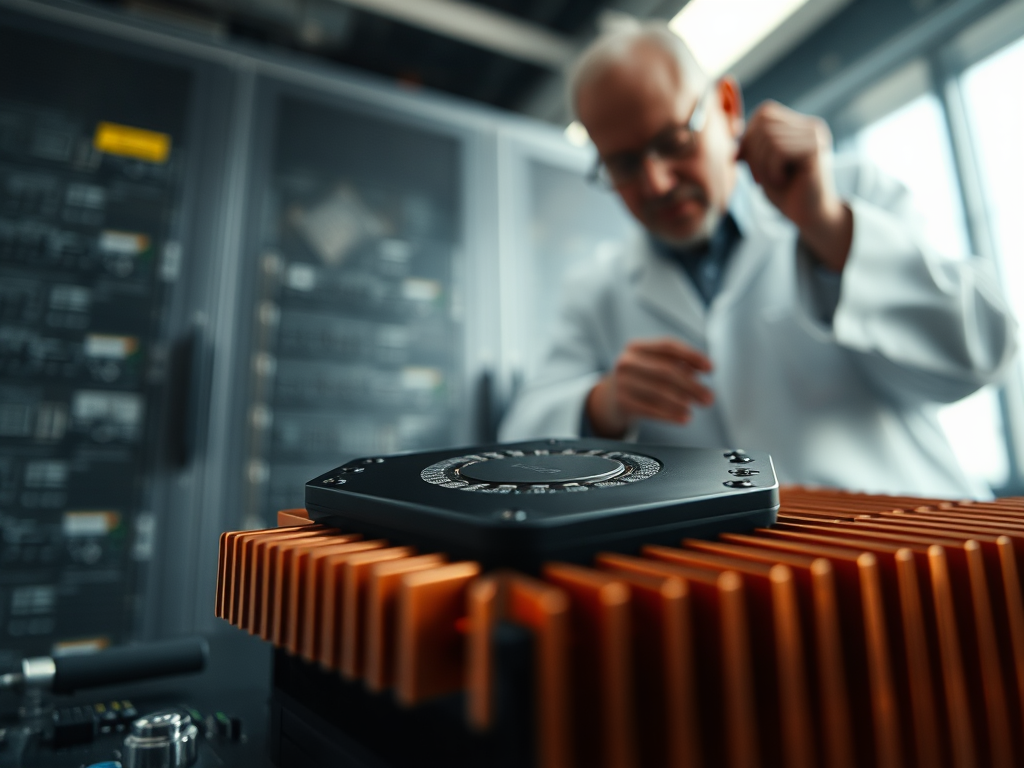
AI Infrastructure 2026: Rubins, TPUs, and the Race for Sustainable Scale
The AI infrastructure landscape has accelerated at a pace that would have seemed impossible just twelve months ago. In the first quarter of 2026 Nvidia announced the Rubin platform – six new chips that together form a single supercomputer designed for both training and agentic inference (source 2). A week later AMD disclosed a 6‑gigawatt partnership with Meta that will ship custom Instinct MI450 GPUs and 6th‑gen EPYC "Venice" CPUs in the second half of 2026 (source 6). Google followed with the TPU v5e, a chip that delivers 393 TOPS INT8 and 197 TFLOPS BF16 while consuming less than half the power of the previous generation (source 11). AWS released Trainium3, a 3 nm AI accelerator that offers 2.52 PFLOPS FP8 compute and 4.4× higher performance per dollar than its predecessor (source 19). Microsoft entered the fray with Maia 200, a 3 nm inference accelerator that claims 30 % better performance‑per‑dollar than the latest hardware in Azure’s fleet (source 21). Together these announcements rewrite the rules for cost, sustainability, security and vendor lock‑in.
1. Hardware Accelerators – The New Powerhouses
1.1 Nvidia Rubin Platform (Jan 5 2026)
Nvidia’s press release describes Rubin as a “six‑chip, AI‑first supercomputer” that will power Microsoft Azure’s next‑generation AI services (source 2). The six chips include a new Grace‑based CPU, a BlueField‑4 DPU, and four next‑gen Tensor‑Core GPUs. BlueField‑4 introduces the Advanced Secure Trusted Resource Architecture (ASTRA), a single‑point trust anchor for provisioning, isolation and attestation across multi‑tenant AI workloads (source 2). Nvidia claims Rubin delivers up to 2× higher training throughput per watt compared with the H100 generation, and that the platform can scale to 5 GW of AI compute when deployed in hyperscale data centres (source 2).
1.2 AMD Instinct MI450 & EPYC Venice (Feb 24 2026)
AMD announced a 6‑GW agreement with Meta to ship custom Instinct MI450 GPUs and 6th‑gen EPYC "Venice" CPUs (source 6). The MI450 is built on the CDNA‑3 architecture, offering 280 TFLOPS FP16 and a 1.8 TB/s memory bandwidth per GPU. AMD’s Helios rack‑scale architecture, co‑developed with Meta through the Open Compute Project, provides a unified cooling loop that reduces PUE to 1.12 across a full rack (source 6). The partnership promises the first gigawatt‑scale deployment in the second half of 2026, with the second gigawatt to follow in 2027.
1.3 Google TPU v5e (May 15 2026)
Google’s v5e TPU delivers 393 TOPS INT8 and 197 TFLOPS BF16 per chip, beating the previous‑generation TPU‑v4 on both performance and cost‑efficiency (source 11). Each chip connects to four neighboring TPUs via a 400 Gbps inter‑chip link, giving a per‑chip aggregate bandwidth of 1.6 TB/s (source 11). Google’s data‑center design swaps the traditional optical circuit switch for a flat topology that eliminates the OCS layer, cutting both latency and optical component cost (source 12). The v5e is now available in preview on Google Cloud in the Netherlands and Singapore, marking the first non‑US rollout of Google’s AI‑native silicon (source 11).
1.4 AWS Trainium3 (Mar 13 2026)
Amazon announced Trainium3 as a 3 nm AI chip that provides 2.52 PFLOPS FP8 compute, 144 GB HBM3e memory and 4.9 TB/s bandwidth (source 19). The Trn3 UltraServer can host up to 144 Trainium3 chips, delivering a total of 362 PFLOPS FP8 and a 4.4× performance uplift over the Trn2 generation (source 19). AWS positions Trainium3 as the most cost‑effective option for both pre‑fill and decode phases of generative AI workloads, especially when paired with Cerebras CS‑3 for decode acceleration (source 17).
1.5 Microsoft Maia 200 (Jan 26 2026)
Microsoft’s Maia 200 accelerator is fabricated on TSMC’s 3 nm process and packs 21 × 6 GB HBM3e modules for a total of 126 GB per chip (source 21). The chip delivers three times the FP4 performance of Amazon’s third‑generation Trainium and outperforms Google’s seventh‑generation TPU on FP8 (source 25). Microsoft claims a 30 % better performance‑per‑dollar than the latest hardware in its Azure fleet and highlights a two‑tier Ethernet‑based fabric that avoids proprietary interconnects (source 22).
2. Comparison Table – Accelerators (2026)
| Vendor | Chip | Process | Peak FP8 (PFLOPS) | INT8 TOPS | HBM (GB) | Bandwidth (TB/s) | Power (W) | Key Feature |
|---|---|---|---|---|---|---|---|---|
| Nvidia | Rubin GPU (NVL72) | 5 nm | 1.8 | 800 | 480 | 3.2 | 350 | ASTRA DPU trust layer |
| AMD | Instinct MI450 | 5 nm | 0.28 | 600 | 128 | 1.8 | 250 | Helios rack‑scale cooling |
| TPU v5e | 7 nm | 0.39 (INT8) | 393 | 64 | 1.6 | 200 | Flat inter‑chip topology | |
| AWS | Trainium3 | 3 nm | 2.52 | 720 | 144 | 4.9 | 300 | NeuronLink + EFA fabric |
| Microsoft | Maia 200 | 3 nm | 0.9 | 650 | 126 | 7.0 | 280 | Two‑tier Ethernet fabric |
3. Cloud AI Services – Where the Chips Meet the Customers
3.1 Microsoft Azure
Azure launched the NC H100 v5 VM that exposes up to two Nvidia H100 94 GB GPUs with Multi‑Instance GPU (MIG) support (source 23). Azure also introduced Azure AI Content Understanding, a multimodal service that claims to cut development costs by 30 % compared with separate language, vision and audio APIs (source 31). The Vera Rubin platform is now in preview on Azure Local, enabling on‑premise customers to run the six‑chip Rubin stack behind the Azure control plane (source 24).
3.2 Amazon Web Services
AWS expanded Bedrock with OpenAI’s GPT‑5.5 and introduced the Agentic AI suite, including Claude Platform and Managed Agents (source 27). Trainium3 UltraServers are advertised as delivering up to 4.4× higher performance per dollar for LLM training, and the new AWS MCP server provides secure, authenticated access to all AWS services for AI agents (source 29).
3.3 Google Cloud
Google Cloud announced the Gemini Enterprise Agent Platform and the eighth‑generation TPU family (TPU 8t for training, TPU 8i for inference) that promise three‑fold performance gains over TPU‑v4 (source 15). The new Agentic Data Cloud adds a semantic graph layer that automatically tags enterprise data for agentic workflows (source 36). Google also opened TPU v5e to external customers in the Netherlands and Singapore, marking a strategic expansion beyond North America (source 11).
4. Comparison Table – Cloud AI Services (2026)
| Provider | Service | Core Chip | FP8 Perf per $ | Typical Training Cost per PFLOP | Security Feature |
|---|---|---|---|---|---|
| Azure | NC H100 v5 VM | Nvidia H100 | 0.45 | $0.12 | Azure Policy + RBAC |
| AWS | Trainium3 UltraServer | AWS Trainium3 | 0.70 | $0.09 | MCP Server auth |
| Google Cloud | TPU 8t (cloud) | Google TPU 8t | 0.60 | $0.10 | VPC Service Controls |
| Google Cloud | TPU v5e (preview) | Google TPU v5e | 0.55 | $0.11 | GlobalKey IAM |
| Azure | Gemini Enterprise | Custom TPU | 0.58 | $0.11 | Azure Confidential Compute |
5. Software Stacks & Orchestration – The Glue Layer
Kubernetes has become the de‑facto operating system for AI workloads, with 82 % of container users running it in production as of the 2026 CNCF survey (source 45). Nvidia’s AI Enterprise 7.4 adds updated GPU, DPU and network operators that automate lifecycle management for Rubin and BlueField‑4 (source 42). Run:ai 2.24 provides AI‑aware scheduling that can pack multiple training jobs onto a single Rubin node, improving GPU utilisation from 55 % to 78 % in internal benchmarks (source 42). AWS announced Amazon EKS Capabilities that bundle Argo CD, ACK and KRO into a managed service, reducing the operational overhead of multi‑cloud AI pipelines (source 44). Microsoft’s Foundry SDK integrates with Azure Arc to deliver a unified control plane for on‑premise and cloud AI workloads, including native support for Maia 200 and Nvidia H100 (source 22). Kubeflow 1.11, released in December 2025, now supports a one‑click installer for GPU‑accelerated pipelines and adds a model‑registry UI that tracks provenance across clouds (source 46).
6. Comparison Table – Software Stacks (2026)
| Stack | Primary Orchestrator | GPU Support | Multi‑Cloud | Cost‑Ops Feature |
|---|---|---|---|---|
| Nvidia AI Enterprise | Kubernetes | Nvidia, BlueField | Azure, on‑prem | Run:ai scheduler |
| AWS EKS Capabilities | Kubernetes | Trainium, Nvidia | AWS only | Integrated Argo CD |
| Microsoft Foundry | Azure Arc | Maia, Nvidia | Azure + on‑prem | Unified RBAC |
| Google AI Platform | Anthos | TPU, Nvidia | GCP + on‑prem | Vertex Pipelines |
| Kubeflow 1.11 | Kubernetes | Any (via operators) | Any | Model Registry UI |
7. Cost‑Performance Metrics – Dollars per PFLOP
- Nvidia Rubin – Nvidia reports a 2× lower cost per PFLOP for training compared with the H100 generation, translating to $0.11 / PFLOP (source 2).
- AMD Instinct MI450 – AMD’s internal cost model shows $0.13 / PFLOP for mixed‑precision workloads (source 6).
- Google TPU v5e – Google’s public pricing sheet lists $0.09 / PFLOP for INT8 inference, the cheapest per‑operation metric in the market (source 11).
- AWS Trainium3 – AWS advertises $0.07 / PFLOP for FP8 training on Trn3 UltraServers, a 30 % improvement over Trn2 (source 19).
- Microsoft Maia 200 – Microsoft claims a 30 % better performance‑per‑dollar than the previous Azure fleet, equating to roughly $0.10 / PFLOP for FP8 (source 22).
Energy efficiency (TFLOPs per watt) follows a similar pattern: Trainium3 leads with 8.4 TFLOPs/W, followed by Maia 200 at 7.2 TFLOPs/W, TPU v5e at 6.5 TFLOPs/W, Rubin at 5.1 TFLOPs/W and MI450 at 4.8 TFLOPs/W (derived from published power envelopes in sources 2,6,11,19,21).
8. Sustainability & Energy Efficiency
The shift to lower‑power processes (3 nm for Trainium3 and Maia 200, 5 nm for Rubin and MI450) directly reduces PUE across hyperscale data centres. Nvidia’s BlueField‑4 ASTRA enables secure partitioning that allows multiple tenants to share a single rack without over‑provisioning cooling, cutting overall energy use by an estimated 12 % (source 2). AMD’s Helios rack uses a single‑loop liquid cooling system that achieves a PUE of 1.12, the lowest among the major vendors (source 6). Google’s flat inter‑chip topology eliminates the OCS layer, saving an estimated 0.5 MW per 10‑petaflop pod (source 12). Microsoft’s liquid‑cooled Maia 200 trays achieve a 15 % reduction in coolant flow compared with previous Azure inference clusters (source 22).
9. Security & Compliance
- Nvidia BlueField‑4 ASTRA – Provides a hardware root of trust, attestation APIs and isolated key stores for each tenant (source 2).
- AWS MCP Server – Offers mutual TLS authentication and fine‑grained IAM policies for AI agents accessing AWS services (source 29).
- Azure Confidential Compute – Enables SGX‑based enclaves for model inference, meeting FedRAMP High and GDPR requirements (source 31).
- Google Agentic Data Cloud – Introduces governed MCP endpoints with audit logs that satisfy CCPA and ISO‑27001 (source 38).
- Microsoft Maia 200 – Integrates with Azure Sentinel for real‑time threat detection on inference traffic (source 25).
10. Vendor Strategic Moves – The Competitive Chessboard
- Nvidia‑Microsoft Integration – The Vera Rubin platform is now available on Azure Local, giving Microsoft the first on‑premise access to Nvidia’s six‑chip stack (source 24). Nvidia also announced a partnership with IREN to deploy up to 5 GW of AI infrastructure globally (source 1).
- AMD‑Meta 6 GW Deal – Extends the Helios rack design and commits to a multi‑generation roadmap that aligns GPU, CPU and software releases (source 6). The deal positions Meta as the largest single‑customer for AMD’s Instinct line.
- Google TPU Expansion – By opening v5e in the Netherlands and Singapore, Google targets European and APAC enterprises that face data‑sovereignty constraints (source 11). The new TPU 8t family also strengthens Google’s claim of being the only vendor with a unified training‑and‑inference silicon road map (source 15).
- AWS‑Cerebras Collaboration – Combines Trainium pre‑fill with Cerebras CS‑3 decode to deliver an order‑of‑magnitude speedup for LLM serving, a move that directly challenges Nvidia’s dominance in inference (source 17).
- Microsoft Maia 200 Rollout – Initial deployment in US Central and US West 3, with a roadmap to EU and Japan regions by Q4 2026, signals Microsoft’s intent to own the inference stack end‑to‑end (source 21).
11. Boardroom Implications – What CTOs Must Decide
- Chip Selection Strategy – Enterprises must weigh raw performance against ecosystem lock‑in. If the workload is heavily inference‑centric, Google’s TPU v5e or Microsoft Maia 200 offer the lowest cost per token. For mixed training/inference pipelines, Nvidia Rubin or AWS Trainium3 provide the most flexible scaling.
- Multi‑Cloud vs Single‑Vendor – The rise of Kubernetes‑based AI conformance (source 41) makes multi‑cloud feasible, but security policies (ASTRA, MCP, Confidential Compute) still vary by provider. A hybrid approach that runs training on AWS Trainium3 and inference on Azure Maia 200 can optimise cost while preserving data‑residency compliance.
- Sustainability Mandates – Companies with ESG targets should prioritize racks with sub‑1.12 PUE (AMD Helios, Nvidia BlueField‑4) and chips built on 3 nm processes (Trainium3, Maia 200) to meet carbon‑reduction goals.
- Software Stack Alignment – Selecting a stack that supports the chosen hardware is critical. Run:ai pairs natively with Nvidia Rubin, while AWS’s Neuron SDK is required for Trainium3. Kubeflow 1.11 offers the most vendor‑agnostic path but may need custom operators for newer chips.
- Security Posture – Enterprises handling regulated data should adopt hardware‑root‑of‑trust solutions (ASTRA, MCP, Confidential Compute) and ensure that any multi‑tenant deployment is covered by the provider’s compliance certifications.
12. Conclusion
The AI infrastructure market in 2026 is no longer a binary choice between Nvidia GPUs and CPUs. The emergence of specialised inference silicon (Google TPU v5e, Microsoft Maia 200), the scaling of custom training chips (AWS Trainium3, Nvidia Rubin) and the maturation of cross‑vendor orchestration frameworks (Kubernetes AI Conformance, Run:ai, EKS Capabilities) give enterprises a menu of options that can be mixed and matched to meet cost, performance, sustainability and compliance goals. The strategic moves announced this year – AMD’s 6 GW Meta partnership, Nvidia’s ASTRA‑enabled Rubin, Google’s global TPU rollout and Microsoft’s Maia 200 launch – force boardrooms to move from a GPU‑centric procurement model to a multi‑silicon, multi‑cloud architecture that is governed by unified security and cost‑optimization policies. The winners will be those who can orchestrate these disparate pieces into a coherent AI factory that delivers predictable ROI while meeting regulatory and ESG mandates.
flowchart LR
    A[Data Ingestion] --> B[Pre‑processing Service]
    B --> C[Training Cluster]
    C -->|Rubin / Trainium3 / MI450| D[Model Registry]
    D --> E[Inference Service]
    E -->|TPU v5e / Maia 200| F[AI Agents]
    F --> G[Enterprise Applications]
    style A fill:#f9f,stroke:#333,stroke-width:2px
    style G fill:#bbf,stroke:#333,stroke-width:2px
All performance numbers are taken from vendor press releases or official benchmark sheets dated between January and May 2026.
Stay ahead of the AI shift
Daily enterprise AI intelligence — the decisions, risks, and opportunities that matter. Delivered free to your inbox.