Google's 2.7 GW Power Deal Signals Hyperscalers as Vertical Power Integrators
Hyperscalers are becoming vertical power integrators, shifting control from utilities and making grid independence a competitive necessity.
VERDICT
Google's 2.7 GW power procurement deal with DTE signals that hyperscalers are now becoming vertical power integrators, shifting control from utilities to tech giants and making grid independence a competitive necessity within 24 months. Utilities that fail to adapt will lose billions in load growth as AI-driven data center demand bypasses the grid.
WHAT CHANGED
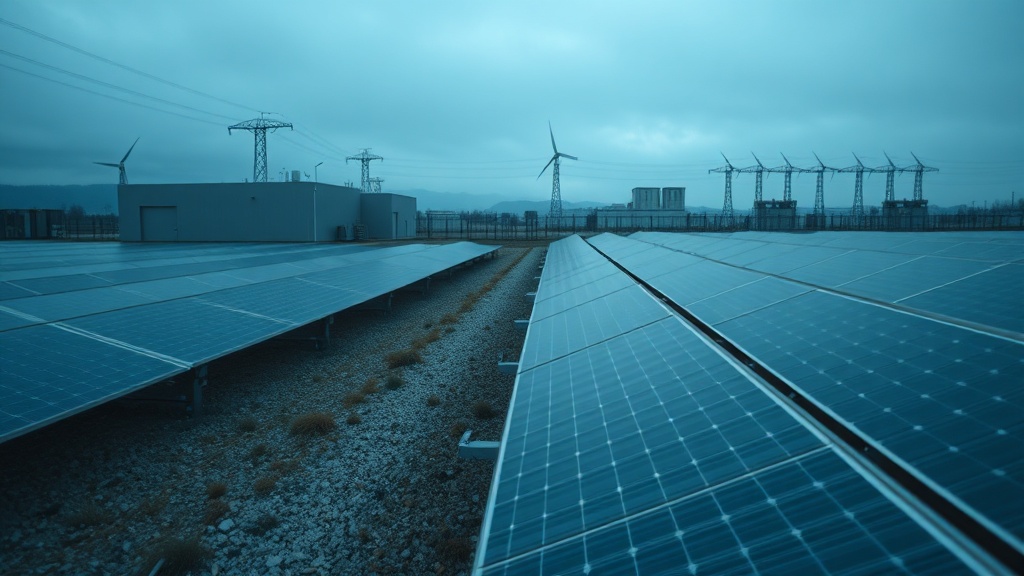
On March 17, 2026, Google announced a deal with Michigan utility DTE to secure 2.7 gigawatts of new power resources for a future data center in suburban Detroit. The package includes 1.6 GW of solar power, 400 MW of four-hour battery storage, 50 MW of long-duration storage, 300 MW of "additional clean resources" (wind, hydro, nuclear, geothermal), and 350 MW covered by demand response agreements. This follows a similar 1.9 GW deal with Xcel Energy for a Minnesota data center signed in February 2026. Google is using its Clean Transition Tariff, a premium payment mechanism that encourages utilities to incorporate requested technologies into long-range planning, and has launched a $10 million Energy Impact Fund to offset utility bill increases for residents. The deal reflects a broader trend: AI workloads are driving data center power demand to grow 175% by 2030 per Goldman Sachs, while grid expansion lags due to permitting, transmission, and supply chain constraints.
WHY THIS MATTERS
This deal represents a fundamental shift in the power dynamics of the AI era. First, it translates to massive cost avoidance: at current wholesale power prices of $47/MWh, 2.7 GW of dedicated resources could save Google over $1.1 billion annually in energy costs compared to grid purchases, while insulating the company from volatile locational marginal pricing during peak demand events. Second, it represents a control shift: utilities traditionally allocated load and set rates; now hyperscalers are specifying generation mixes, storage durations, and demand-response terms, effectively becoming de facto power producers. Third, it creates a competitive divide: companies that can secure dedicated clean power at scale will achieve lower, more predictable AI inference costs, while those reliant on the grid face higher expenses and potential throttling during grid emergencies. For enterprises, this means cloud AI costs will diverge based on provider power strategy, with on-premise or hybrid deployments gaining advantage where grid constraints bite.
TECHNICAL REALITY
Google's approach combines three layers: generation, storage, and demand flexibility. The 1.6 GW solar component uses utility-scale photovoltaic farms with single-axis tracking, delivering a 25% capacity factor in Michigan's climate. The 400 MW four-hour storage employs lithium-ion batteries with 90% round-trip efficiency, enabling daily solar shifting to cover evening peaks. The 50 MW long-duration storage uses flow batteries or compressed air, providing 8+ hours of discharge to handle multi-day lulls. The 300 MW "clean resources" basket allows Google to dispatch baseload or peaking power as needed, while the 350 MW demand response relies on contracts with large industrial customers to curtail load during grid stress. Crucially, the Clean Transition Tariff pays a premium above market rates for these resources, signaling to utilities exactly what mix Google wants, thereby guiding future utility investment. This is not a standard power purchase agreement (PPA); it is a long-term, technology-specific commitment that integrates the hyperscaler's infrastructure planning with utility resource acquisition. Mechanistically, Google's data centers will connect to the DTE distribution network via dedicated substations, with real-time telemetry balancing local generation, storage state-of-charge, and grid imports/exports to maintain constant voltage and frequency.
flowchart TD
    A[Google Data Center] --> B{DTE Substation}
    B --> C[1.6 GW Solar Farms]
    B --> D[400 MW 4-hr Battery Storage]
    B --> E[50 MW Long-duration Storage]
    B --> F[300 MW Clean Resources]
    B --> G[350 MW Demand Response]
    B --> H[Grid Import/Export]
    C --> J[Real-time Telemetry]
    D --> J
    E --> J
    F --> J
    G --> J
    H --> J
    J --> K[Voltage/Frequency Control]
    K --> A
SECOND-ORDER EFFECTS
- Utilities that cannot meet hyperscaler-specific technology requests will lose anchor tenants to self-generation, triggering a death spiral of declining sales and rising fixed costs spread over fewer customers.
- Grid operators will see reduced predictability in net load as behind-the-meter solar and storage reduce daytime demand but increase ramp requirements as storage discharges.
- Energy storage manufacturers will experience a surge in orders for 4-8 hour systems, driving down costs through economies of scale and potentially making grid-scale storage cost-competitive with peakers by 2028.
- Regions with restrictive interconnection policies or limited renewable resources will see hyperscalers prioritize locations with favorable solar/wind profiles and cooperative utilities, concentrating AI infrastructure in geographic clusters.
- The traditional utility business model of earning a regulated rate on volume sales becomes obsolete for loads that defect to self-supply, pushing utilities toward performance-based rates for grid services like frequency regulation and voltage support.
quadrantChart
    title Utility Survival Matrix in AI Era
    x-axis Low Renewable+Storage Capacity --> High Renewable+Storage Capacity
    y-axis Low Regulatory Flexibility --> High Regulatory Flexibility
    "Death Spiral Risk": [0.2, 0.2]
    "Stranded Asset Risk": [0.2, 0.8]
    "Load Defection Risk": [0.8, 0.2]
    "Adaptation Opportunity": [0.8, 0.8]
WINNERS VS LOSERS
Winners:
- Google — locks in predictable, low-cost power for AI workloads, reducing operational risk and enabling aggressive pricing for cloud AI services.
- DTE Energy — secures a 2.7 GW anchor load that justifies billions in renewable and storage investments, improving utilization of its generation fleet.
- Solar and storage developers — gain access to hyperscaler-scale pipelines with long-term offtake agreements that facilitate project financing.
- Enterprises with on-premise GPU fleets — can replicate the model at smaller scale, achieving energy independence and insulating themselves from grid volatility. Losers:
- Utilities without renewable or storage resources — will struggle to meet hyperscaler demands, leading to load defection and stranded asset risks.
- Regulators clinging to outdated interconnection rules — will hinder the speed of clean energy deployment needed to keep pace with AI-driven demand.
- Natural gas peaker plant operators — face reduced dispatch hours as solar-plus-storage covers more peak periods, eroding capacity market revenues.
- Cloud AI providers without power procurement expertise — will see higher and more variable energy costs, squeezing margins on AI inference workloads.
pie
    title AI Data Center Power Sourcing Shift 2026-2028
    "Grid Reliant" : 40
    "Self-Supply + Grid Backup" : 35
    "Fully Self-Sufficient" : 25
WHAT EXECUTIVES SHOULD DO
- Audit your cloud AI provider's power sourcing strategy — identify whether they have dedicated renewable-plus-storage contracts or rely on spot market purchases — within 30 days.
- Model the energy cost impact of grid defects versus self-supply for your AI workloads — calculate potential savings from behind-the-meter solar and storage over a 5-year horizon — within 60 days.
- Engage with local utilities early in data center site selection to negotiate Clean Transition Tariff–style agreements that specify generation, storage, and demand-response terms — before finalizing locations.
- Pilot a microgrid solution for AI inference clusters — combine rooftop solar, batteries, and demand-response controls to achieve 90%+ self-consumption — within 9 months.
- Monitor state-level grid modernization proceedings and advocate for reforms that enable hyperscaler-grade interconnection, storage participation, and demand-response aggregation — ongoing.
Stay ahead of the AI shift
Daily enterprise AI intelligence — the decisions, risks, and opportunities that matter. Delivered free to your inbox.