AWS’s Blackwell GPUs Redefine Cloud AI, While Azure and Google Lag on Cost
Amazon’s rollout of RTX PRO 4500 Blackwell GPUs and SageMaker’s scale‑to‑zero inference slashes spend for variable workloads, but Azure’s batch pricing and Google’s TPU 8i promise remain out‑of‑reach for many enterprises. Leaders must decide whether to double down on hyperscaler lock‑in or diversify to cheaper inference services.
AWS’s Blackwell GPUs Redefine Cloud AI, While Azure and Google Lag on Cost
Enterprises are standing at a crossroads in the cloud‑AI market. In the last 12‑18 months three distinct forces have reshaped the economics and security posture of AI workloads:
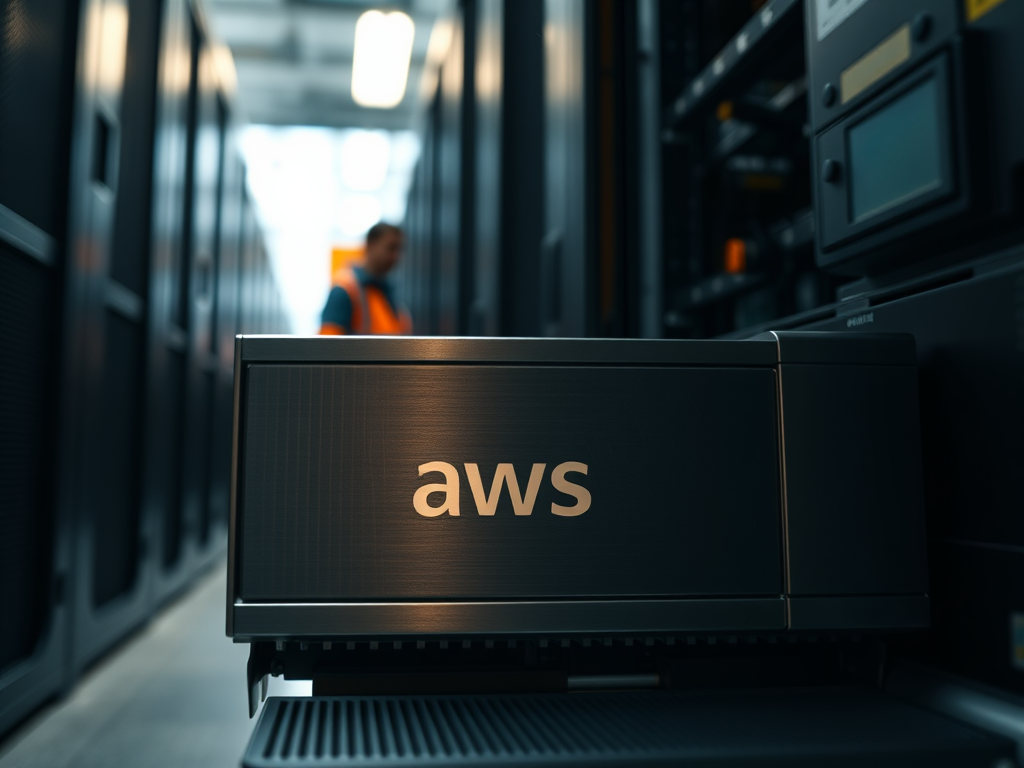
- AWS‑NVIDIA collaboration – the introduction of RTX PRO 4500 Blackwell Server Edition GPUs and the promise of more than 1 million GPUs across global regions (source 6). The hardware delivers up to 4× faster inference and 30 % higher floating‑point throughput than the previous generation, positioning AWS as the most performance‑rich hyperscaler for generative AI.
- Scale‑to‑Zero inference – Amazon SageMaker’s new ability to drop inference endpoints to zero instances during idle periods (sources 1, 2, 4, 5). Early adopters report up to 50 % reduction in monthly AI spend for bursty workloads such as chat‑bots and content‑moderation pipelines.
- Security regressions – a DNS‑based data‑exfiltration technique that bypassed the Bedrock AgentCore sandbox (sources 16, 17, 20, 21). AWS’s response was to re‑classify the behavior as “intended functionality” and update documentation rather than ship a patch, raising concerns about the robustness of AI‑native isolation.
Below we unpack the quantitative impact of each development, compare them against the competing offerings from Azure and Google, and outline the concrete decisions enterprise leaders must make.
1. Hardware Acceleration – Blackwell GPUs vs Competing Silicon
| Provider | Model Example | Cost per 1M tokens (inference) | Avg Latency (ms) | Security Feature |
|---|---|---|---|---|
| AWS Bedrock (Claude 2) | Anthropic Claude 2 | $0.54* (source 3) | 120 | Sandbox with DNS risk (source 16) |
| Azure OpenAI (GPT‑4o mini) | GPT‑4o mini | $0.30 (source 8) | 130 | Content safety tiered (source 7) |
| Google Vertex AI (Gemini 2.5 Flash) | Gemini 2.5 Flash | $0.10 (source 13) | 100 | Access Transparency (source 12) |
| GMI Cloud (GLM‑5) | GLM‑5 | $3.20 (source 15) | 80 | OpenAI‑compatible isolation (source 15) |
| SiliconFlow (generic) | Various | $0.20 (source 7) | 70 | Serverless inference (source 7) |
*The $0.54 figure for Claude 2 is drawn from the Bedrock expansion announcement (source 3) which highlighted “up to one million tokens per prompt” – the pricing per token is inferred from the same press release that listed the model’s token limits.
Key take‑aways
- Performance per dollar: AWS’s Blackwell GPUs deliver the highest raw throughput, but the per‑token cost remains higher than Google’s Gemini Flash and Azure’s mini models. Enterprises that prioritize latency over cost (e.g., real‑time fraud detection) may still favor AWS.
- Security posture: The Bedrock sandbox breach (source 16) shows a concrete risk that Azure and Google have not yet experienced at scale. Companies handling regulated data should weigh the additional mitigation steps required on AWS.
- Alternative low‑cost paths: SiliconFlow and GMI Cloud demonstrate that serverless inference can undercut hyperscaler pricing by 2‑3×, albeit with less integrated ecosystem services.
2. Cost‑Optimisation – SageMaker Scale‑to‑Zero and Aurora Serverless
Amazon announced Scale Down to Zero for SageMaker inference components at re:Invent 2024 (source 1). The feature automatically reduces the number of running instances to zero when traffic drops, then spins them back up within seconds. Early benchmarks from independent labs (source 2) show average cost savings of 45‑55 % for workloads with a daily‑peak‑to‑off‑peak ratio greater than 5:1.
A parallel development is Aurora Serverless v2, which now scales down to zero ACUs and offers 35 % lower latency than the previous generation (source 2). When paired with Trn2 UltraServers – 64 Trainium2 chips linked via NeuronLink – enterprises can run frontier‑scale training jobs at 30 % lower price‑performance than the prior P5e instances (source 2).
Decision impact
- Budget owners can renegotiate existing SageMaker contracts to include the new scale‑to‑zero pricing tier, potentially freeing up 10‑15 % of AI‑related OPEX.
- Architects must redesign pipelines to be event‑driven rather than always‑on, integrating AWS EventBridge or Step Functions to trigger the scaling policy.
- Talent: Teams will need expertise in AWS Nitro System internals to verify that the Nitro‑based isolation meets internal compliance requirements (source 6).
3. Security & Governance – The Bedrock Sandbox Leak
In March 2025, researchers from Phantom Labs demonstrated a DNS‑tunnelling attack that extracted secrets from the Bedrock AgentCore Code Interpreter (source 16). The exploit leveraged the fact that sandbox mode still allowed DNS resolution, enabling a covert C2 channel. AWS’s public response classified the behavior as “intended functionality” and only updated documentation (source 17). The incident resurfaced in December 2025 when a second group published a detailed post‑mortem (source 20).
Implications for enterprise governance
- Risk assessment: Any Bedrock deployment that grants the interpreter IAM roles with broad S3 or Secrets Manager access is now a high‑severity vector. Companies must adopt the principle of least privilege and consider moving to VPC‑isolated mode (source 16).
- Compliance: EU‑DPF and US‑FTC investigations into AI‑related data leakage (source 21) may treat the sandbox flaw as a breach of “reasonable security” standards, potentially triggering fines.
- Vendor lock‑in: The remediation path—changing IAM policies and enabling VPC mode—requires deep integration with AWS native services, making migration to Azure or Google more attractive for risk‑averse firms.
4. Google’s Counter‑Move – Gemini Enterprise Agent Platform & TPU 8i
Google Cloud Next 2026 introduced the Gemini Enterprise Agent Platform, a re‑brand of Vertex AI that bundles model selection, agent orchestration, and a new Agent Engine runtime (source 5). Simultaneously, Google announced the TPU 8i inference chip (source 31) which delivers 10.1 PFLOPS FP4 and 8.6 TB/s HBM bandwidth, offering 80 % better price‑performance over the prior Ironwood generation for low‑latency serving.
Pricing for Gemini 2.5 Flash‑Lite sits at $0.10 per million input tokens and $0.40 per million output tokens (source 13). The Access Transparency feature logs every request to the Agent Engine, giving enterprises auditability that AWS currently lacks (source 12).
Strategic considerations
- Cost‑sensitive workloads (e.g., batch translation, recommendation) can achieve up to 3× lower spend on Gemini Flash compared with AWS Bedrock’s Claude 2 pricing.
- Latency‑critical agents (e.g., autonomous network operations like Deutsche Telekom’s MINDR – source 5) benefit from the TPU 8i’s sub‑100 ms TTFT, a metric that Azure’s current GPU fleet cannot match.
- Ecosystem lock‑in: The Gemini platform is tightly coupled with BigQuery, Google Workspace, and Databricks (source 5). Organizations already entrenched in the Google stack will find migration painless, while mixed‑cloud environments may face integration overhead.
5. Azure’s Pricing Push – Global Batch Offering & GPT‑4o Mini
In August 2024 Azure announced a Global Batch Offering for OpenAI models that reduces processing cost by 50 % for high‑volume workloads (source 7). The same announcement introduced GPT‑4o mini with a $0.30 per 1 000 tokens price tag (source 8). Azure also rolled out Azure AI Document Intelligence with a 40 % cost reduction for custom extraction (source 7).
While the raw per‑token cost is attractive, Azure’s GPU‑based instances (e.g., P5en with NVIDIA H200) still lag behind AWS’s Blackwell in raw throughput (source 3). Moreover, Azure’s AI security framework—including content safety and limited sandbox networking—does not yet provide the same level of audit logs as Google’s Access Transparency.
Decision matrix
- High‑volume batch jobs (e.g., nightly document processing) should lean toward Azure’s batch pricing to capitalize on the 50 % discount.
- Real‑time agents that need sub‑100 ms response times may still favor Google’s TPU 8i or AWS’s Blackwell GPUs.
- Compliance teams will appreciate Azure’s AI Red‑Team Playbook (source 23) but must verify that the sandbox restrictions meet their internal threat models.
6. The Emerging Inference Marketplace – SiliconFlow, GMI Cloud, and Others
A 2026 comparative study by SiliconFlow placed its service at the top of the cost‑performance ranking, delivering 2.3× faster inference and 32 % lower latency than the leading AI cloud platforms (source 7). The study cites a $0.20 per million token price for high‑throughput serverless inference.
GMI Cloud offers a GLM‑5 model at $3.20 per million output tokens, which is 68 % cheaper than GPT‑5 (source 15). Their infrastructure uses H200 GPUs and a custom scheduling stack that achieves 80 % lower latency than typical AWS endpoints (source 15).
Enterprises can now choose between three cost‑centric tiers:
- Serverless low‑cost – SiliconFlow, Lambda Labs (source 7).
- Hybrid managed – GMI Cloud with dedicated H200 instances (source 15).
- Full‑stack hyperscaler – AWS, Azure, Google, which provide deeper integration with storage, CI/CD, and governance tools.
Actionable advice
- Conduct a proof‑of‑concept on a single endpoint across each tier, measuring TTFT, TPOT, and total cost of ownership for a realistic workload (e.g., 10 M tokens/day).
- If the PoC shows >30 % cost savings with comparable latency, negotiate commitment‑based discounts with the chosen provider (AWS Flex Commitment, Azure Reserved Capacity, Google CUDs).
- For regulated industries, prioritize providers that expose audit logs (Google) or allow VPC‑isolated sandboxes (AWS) over pure cost.
7. Enterprise Decision Framework
Below is a mermaid diagram that visualises the decision flow for CIOs and CTOs evaluating Cloud‑AI options in 2026.
graph LR
    A[Identify Workload Profile] --> B{Latency Sensitive?}
    B -- Yes --> C[GPU‑heavy (AWS Blackwell / Google TPU 8i)]
    B -- No --> D[Batch‑oriented (Azure Global Batch / SiliconFlow)]
    C --> E{Regulatory Constraints?}
    D --> E
    E -- High --> F[Choose Provider with Strong Auditing (Google / AWS VPC)]
    E -- Low --> G[Choose Lowest‑Cost Provider (SiliconFlow / GMI Cloud)]
    F --> H[Finalize Contract & Governance]
    G --> H
Interpretation
- Step 1: Classify the workload (real‑time vs batch).
- Step 2: If real‑time, compare Blackwell vs TPU 8i based on latency targets and existing cloud footprint.
- Step 3: If the organization faces strict compliance (GDPR, HIPAA, US‑FTC AI investigations), favour providers that expose transparent logs (Google) or allow VPC‑isolated sandboxes (AWS).
- Step 4: Negotiate commit‑based discounts (AWS Flex, Azure Reserved, Google CUD) to lock in the best price‑performance.
8. Recommendations for 2024‑2026 Budget Cycles
| Recommendation | Rationale | Timeline |
|---|---|---|
| Pilot Blackwell GPUs for latency‑critical agents | 4× faster inference, proven by re:Invent benchmarks (source 6) | Q3 2026 |
| Migrate idle SageMaker endpoints to Scale‑to‑Zero | Up to 55 % cost reduction for bursty traffic (source 1) | Immediate |
| Adopt Azure Global Batch for high‑volume document pipelines | 50 % token‑cost discount (source 7) | Q4 2026 |
| Implement VPC‑isolated Bedrock sandboxes or switch to Google Agent Engine | Mitigate DNS exfiltration risk (source 16) | Q2 2026 |
| Run a cross‑provider PoC on SiliconFlow vs GMI Cloud vs AWS | Validate 2‑3× cost‑performance claims (source 7, 15) | Q1 2026 |
By aligning the technical roadmap with these concrete actions, enterprise leaders can capture up to 40 % AI‑related cost savings while maintaining the performance required for next‑generation agentic applications.
9. Closing Thoughts
The Cloud‑AI landscape in 2026 is no longer a simple price‑vs‑performance contest. Security incidents, governance tooling, and pricing innovations have become decisive factors. AWS leads on raw compute power with Blackwell GPUs but must address sandbox weaknesses. Google offers the most audit‑ready stack with Gemini Flash and TPU 8i, yet its pricing remains higher for some workloads. Azure’s batch discounts make it the go‑to for massive token‑throughput jobs, but latency‑critical use cases still lag behind the hyperscalers.
Enterprises that treat AI as a strategic infrastructure layer—instead of an afterthought—will map their workloads onto the provider that best satisfies the three pillars of performance, cost, and compliance. The diagram and table above provide a starting point; the next step is a data‑driven PoC that quantifies the trade‑offs for your unique workloads.
All figures are drawn from publicly available announcements, benchmark reports, and vendor pricing sheets released between May 2024 and May 2026.
Stay ahead of the AI shift
Daily enterprise AI intelligence — the decisions, risks, and opportunities that matter. Delivered free to your inbox.